
Copper that Ages Green
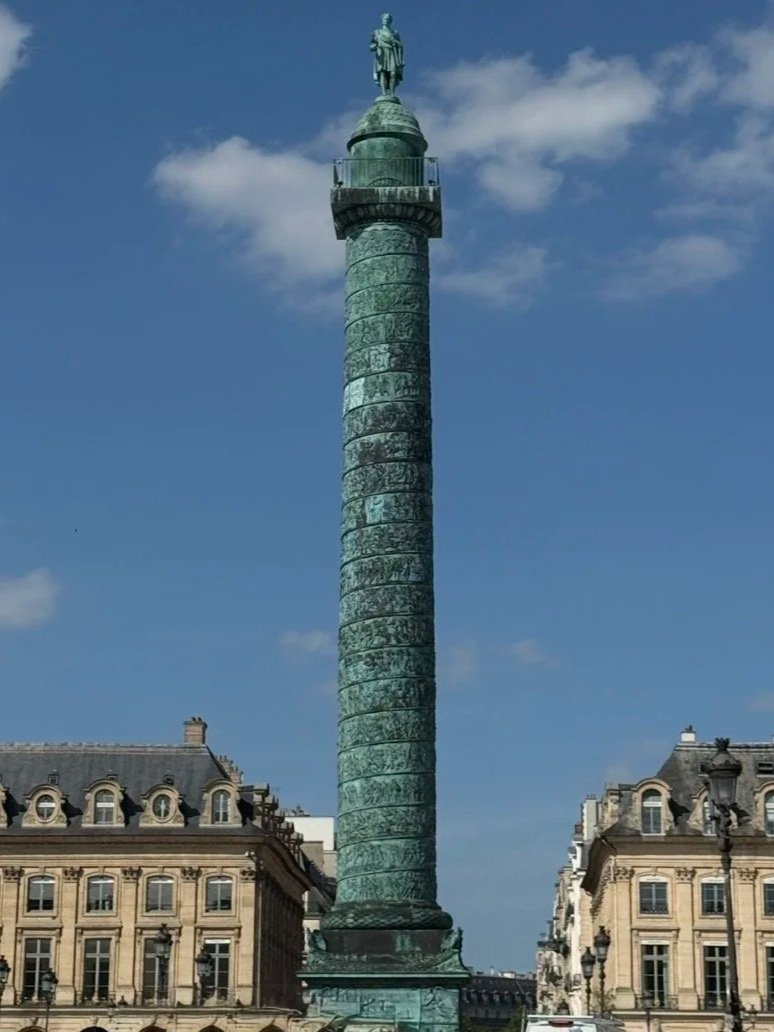
Copper that ages green - Paris
The Vendôme Column and the Case for Copper That Ages Green
On a trip through Paris this year I kept my eyes on the rooftops, and one monument stopped me in the middle of the Place Vendôme. Rising 44 meters over the square is the Vendôme Column — and nearly every inch of it is the same story we tell our clients about copper.
The column reads deep green from the street, and that color is the whole point. Its shaft is clad in bronze, a copper alloy, and like the copper we install on valleys, ridges, domes, and flashing, it doesn't rust or rot as it ages — it patinas. That green film is copper reacting with air and moisture over decades, sealing itself beneath a protective layer. What looks like age is actually armor. It's exactly why we reach for copper on the details that have to outlast everything around them.
The history behind it is worth knowing. Napoleon I ordered the column raised between 1806 and 1810 to commemorate his 1805 victory at Austerlitz, modeled on Trajan's Column in Rome, with a spiral of bas-reliefs winding up a shaft cast from the bronze of cannons captured in battle. Imperial propaganda claimed 1,200 cannons; historians put the real figure closer to 400. Vendome column, a bronze plated barrel made with Prussian canons - VisitingParis By Yourself +2
Here's the part that speaks directly to our trade: the column you photograph today is not the original. During the Paris Commune it was pulled down on 16 May 1871, then rebuilt between 1873 and 1875 and raised back over the square that December. It has stood ever since, and has been classified a Historic Monument since 1992. Vendome column, a bronze plated barrel made with Prussian canons - VisitingParis By Yourself +2
That rebuild is the lesson we return to on historic copper. When copper has served a hundred years or more on a building, the honest call is usually not to patch it. Aged copper has typically reached the end of its service life, and soldering repairs into old, work-hardened metal is unreliable. The stronger choice — the one that respects the building — is a faithful replacement, done to match. Paris didn't glue its monument back together. They recast it properly, and it's still commanding the skyline generations later.
That's the standard we hold at Carolina Slate. Copper is a material we specialize in alongside natural slate and clay tile, and we treat it the way this column earns its keep: installed to last, allowed to patina into its own protection, and replaced faithfully when a century of weather finally asks for it. When we evaluate a historic copper roof, dome, or flashing detail here in North Carolina, we're asking the same question the engineers asked over that Paris square — is there life left in this metal, or is it time to do it right for the next hundred years?
The green never bothered me on that column. It's the surest sign that copper, cared for correctly, simply doesn't quit.