
In our last post, we looked at copper valleys, the open metal channel where two roof slopes meet. Some historic slate roofs take a very different approach. Look closely at the photo below and you won't see any metal in the valley at all. The slate simply curves from one slope to the next, as if the roof were one continuous surface.
This is a rolled valley, also called a swept or round valley. It's one of the most graceful details in traditional slate work, and one of the least common, because it takes real skill and patience to build.
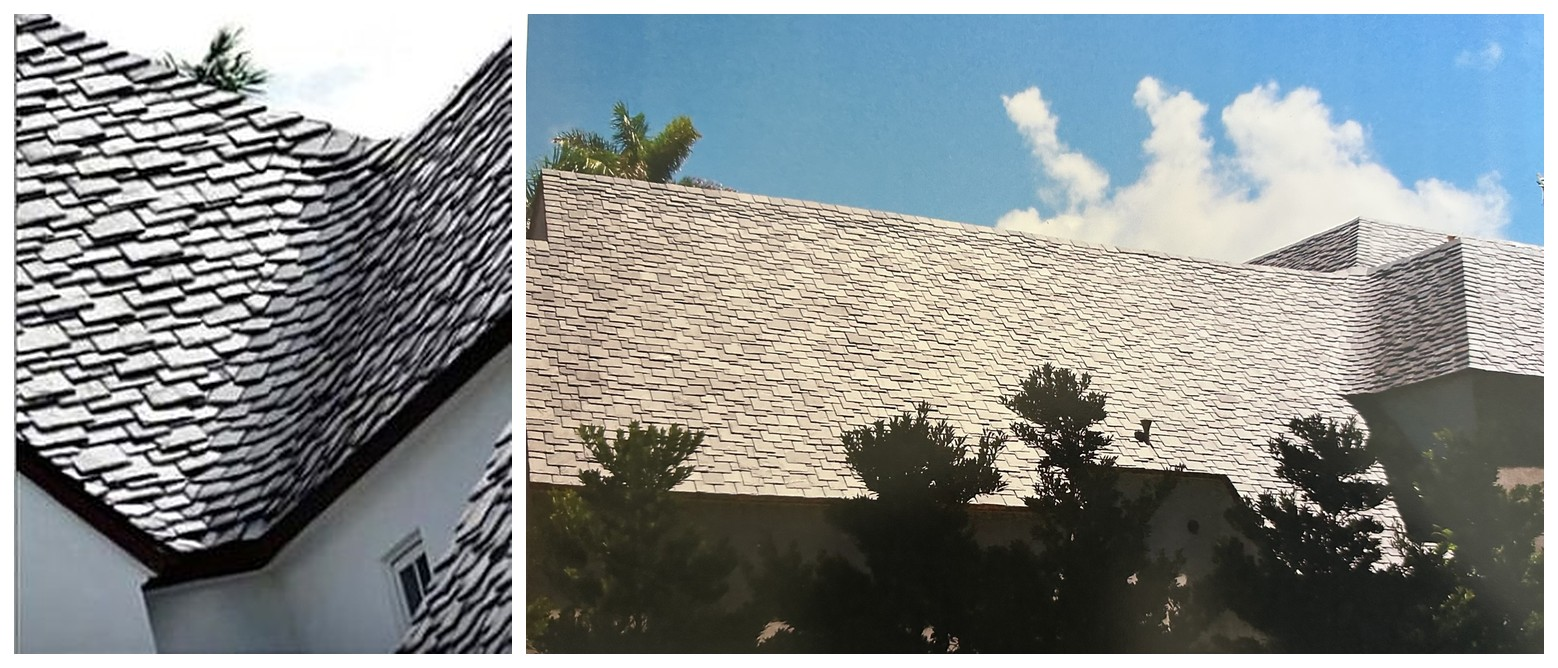
Rolled Slate Valley
The Rolled Slate Valley: A Rare Craft on Slate Roofs
In our last post, we looked at copper valleys, the open metal channel where two roof slopes meet. Some historic slate roofs take a very different approach. Look closely at the photo below and you won't see any metal in the valley at all. The slate simply curves from one slope to the next, as if the roof were one continuous surface.
This is a rolled valley, also called a swept or round valley. It's one of the most graceful details in traditional slate work, and one of the least common, because it takes real skill and patience to build.
[Insert photo here]
How a Rolled Valley Is Built
A rolled valley starts with the roof deck, long before a single slate goes on. On an ordinary roof, the decking meets in a sharp corner at the valley. For a rolled valley, the decking has to be built differently: the valley is framed and sheathed into a smooth, rounded curve, often using narrow boards or tapered wood strips that can follow the radius. That curved base is what lets the slate sweep across the valley instead of meeting in a hard line. If the curve isn't built right, no amount of skill with the slate can make the valley lie smooth or shed water properly.
Each slate in the valley is then cut and tapered by hand so it fits the curve. Course by course, the slates fan across the valley, overlapping just as they do on the rest of the roof. Because the valley carries so much water, metal flashing is commonly woven in beneath the slate as an added layer of protection, hidden from view.
The result looks effortless, but every course has to line up across both slopes and through the curve. A rolled valley takes far more time than an open metal valley, which is why so few roofers build them today.
Caring for a Rolled Valley
A well-built rolled valley can last as long as the slate itself. But because the valley still carries water from both slopes, it deserves attention when something goes wrong.
Keep it clear. Leaves and debris that collect in the curve hold moisture against the slate.
Watch for slipped or cracked slates. One displaced slate in the curve can open a path for water.
Avoid sealant. Tar or caulk smeared along a rolled valley hides the problem, traps moisture, and makes a proper repair harder later.
Repairing a rolled valley is not a job for a general roofer. Replacement slates have to be cut and tapered to match the curve, and set with slate hooks so they hold securely without disturbing the slates around them. Done carelessly, a repair can break the line of the valley or crack the surrounding slate. Done right, it disappears into the roof.
Let Us Take a Look
If your home has a rolled valley, or any historic slate detail you want to preserve, we'd be glad to help. Ricardo has over 30 years of hands-on experience with slate, and he'll give you an honest evaluation of what your roof needs and how to keep its original character.
Contact Carolina Slate to schedule a slate roof evaluation.