
A valley is the channel where two slopes of a roof meet. Every drop of rain that lands on both of those slopes ends up running down that one channel. That makes the valley the hardest-working part of any roof, and on a slate or clay tile roof, it's usually the first place a leak begins.
Slate and clay tile can last a century or more. The metal in the valley beneath them almost never does. When it wears out, the roof around it may still be in excellent shape. The good news is that a worn valley doesn't mean a new roof. It means a new valley, done right.
Copper Valley Replacement: What Happens When Valley Metal Wears Out
A valley is the channel where two slopes of a roof meet. Every drop of rain that lands on both of those slopes ends up running down that one channel. That makes the valley the hardest-working part of any roof, and on a slate or clay tile roof, it's usually the first place a leak begins.
Slate and clay tile can last a century or more. The metal in the valley beneath them almost never does. When it wears out, the roof around it may still be in excellent shape. The good news is that a worn valley doesn't mean a new roof. It means a new valley, done right.
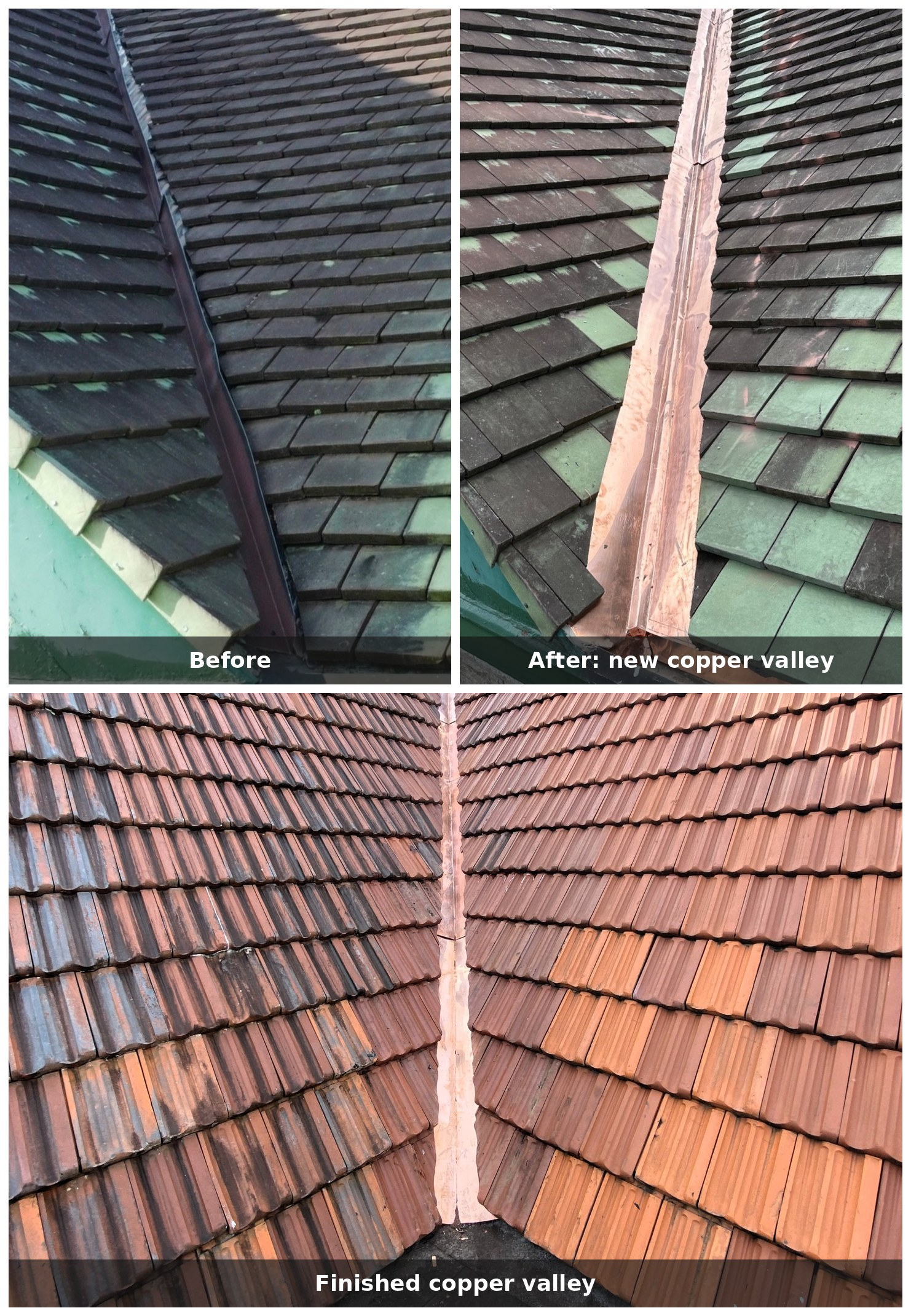
[Insert photo collage here]
When Valley Metal Reaches the End of Its Life
Valley metal wears from the inside out. Water, leaves, and debris move across it with every storm, and in winter, ice sits in the channel. Over the years the metal thins, pits, and eventually develops pinholes and cracks, often in places you can't see from the ground.
Signs a valley has reached the end of its life include:
Water stains on a ceiling or wall below where two roof slopes meet
Rust, heavy pitting, or holes in the valley metal
Tar, caulk, or roof paint smeared along the valley to stop a leak
Leaves and debris that stay trapped in the valley
Slates or tiles along the valley that are loose, slipping, or cracked
Patching an old valley rarely lasts. Sealant over worn metal dries out and cracks within a season or two. On aged copper, soldering a patch onto thin, brittle metal isn't reliable either. Once the metal has done its job, the lasting repair is a new valley.
What Goes Into Replacing a Valley
A new valley takes far more work than the finished copper shows. Most of the job is careful work on the slate or tile around it.
Setting up to protect the roof. Before anything is removed, we set roof ladders and roof jacks so our weight stays off the slate or tile, which can crack underfoot.
Removing the slates or tiles along the valley. Each row on both sides of the valley is taken up by hand so the pieces can be saved and set back in place. Pieces that crack or are already broken are set aside for replacement.
Removing the old valley metal. With the roof opened up, the worn metal comes out in full, along with any tar or patches from past repairs.
Checking the wood underneath. Years of small leaks can rot the decking under a valley. Any damaged wood is replaced before new metal goes down, so the new valley has a solid base.
Installing the new copper valley. The copper is formed to fit the valley and held with copper cleats, so it can expand and contract with the seasons without tearing. Fasteners stay out of the channel where water runs.
Resetting the slates or tiles. The saved pieces go back row by row, cut to a clean line along the valley, with replacements matched as closely as possible to the originals.
The result is a valley that should carry water off the roof for decades, with the roof around it left as it was.
Why We Use Copper
Copper is the traditional valley metal on historic slate and clay tile roofs, and for good reason. It doesn't rust, it bends to fit the valley without cracking, and it can last as long as the slate or tile around it. Bright and new at first, it weathers over time to a deep brown and eventually a soft green patina.
Let Us Take a Look
If you've noticed a leak where two roof slopes meet, or you can see patches along a valley, we'd be glad to help. Ricardo has over 30 years of hands-on experience with slate, clay tile, and copper, and he'll give you an honest evaluation of whether your valley needs repair or replacement.
Contact Carolina Slate to schedule a valley evaluation.