
What We Find When “Just Another Roofer” Repairs a Slate Roof
Exploring the rooftops of France has been one of my favorite things to share here. From the slate domes of the Petit Palais to the copper crowns of the Palais Garnier, those posts were as fun to write as they were educational. But for now, it’s time to let Paris rest and bring our focus back home, to the slate roofs we care for every day.
And there’s something here at home we see far too often.
When we’re called to evaluate a slate roof, the slate itself is rarely the biggest problem. More often, it’s the repairs.
Natural slate can last 100 years or more. But when it’s repaired by roofers who don’t work with slate every day, a simple fix can turn into a much larger project. Here are the most common problems we find, and what they mean when it’s time to make the repair right.
Caulk, Tar, and Roof Paint Everywhere
Valley
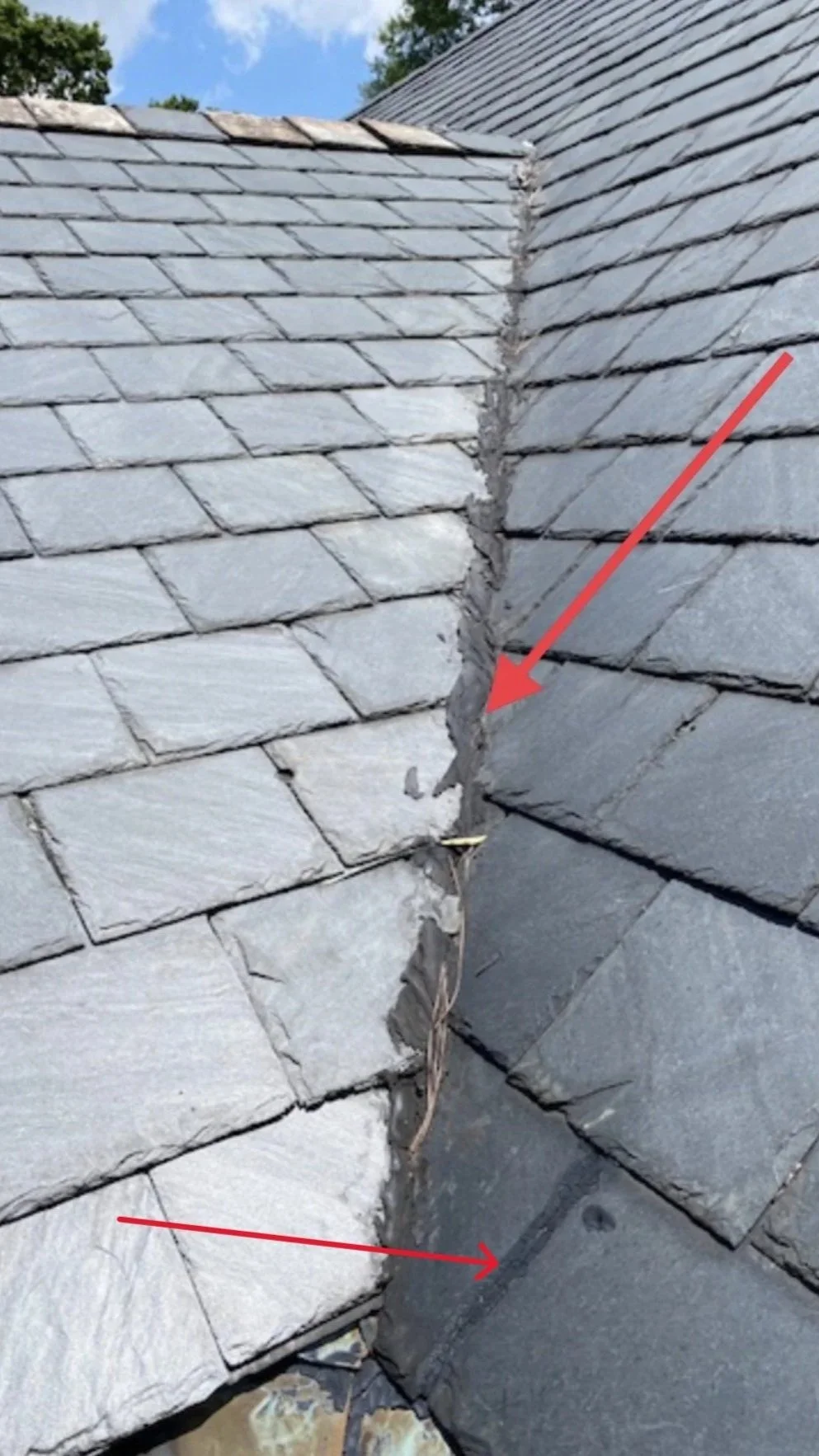
This is the most common thing we see. When a slate cracks or a valley leaks, the quick fix is often caulk, tar, or roof paint smeared over the problem area. In the photo, you can see tar run along a valley.
These products may stop a leak for a season or two, but they’re a temporary fix and are never recommended on slate. Over time they dry out, crack, and pull away, and they trap moisture against the slate and the metal beneath it.
The bigger problem comes when it’s time for a proper repair. Slates covered in tar or caulk usually can’t be cleaned and reused. A repair that should have meant replacing two or three slates now means replacing every slate the sealant touched. What could have been a smaller repair becomes a much larger one.
Handmade Tabs Instead of Slate Hooks
Handmade tab
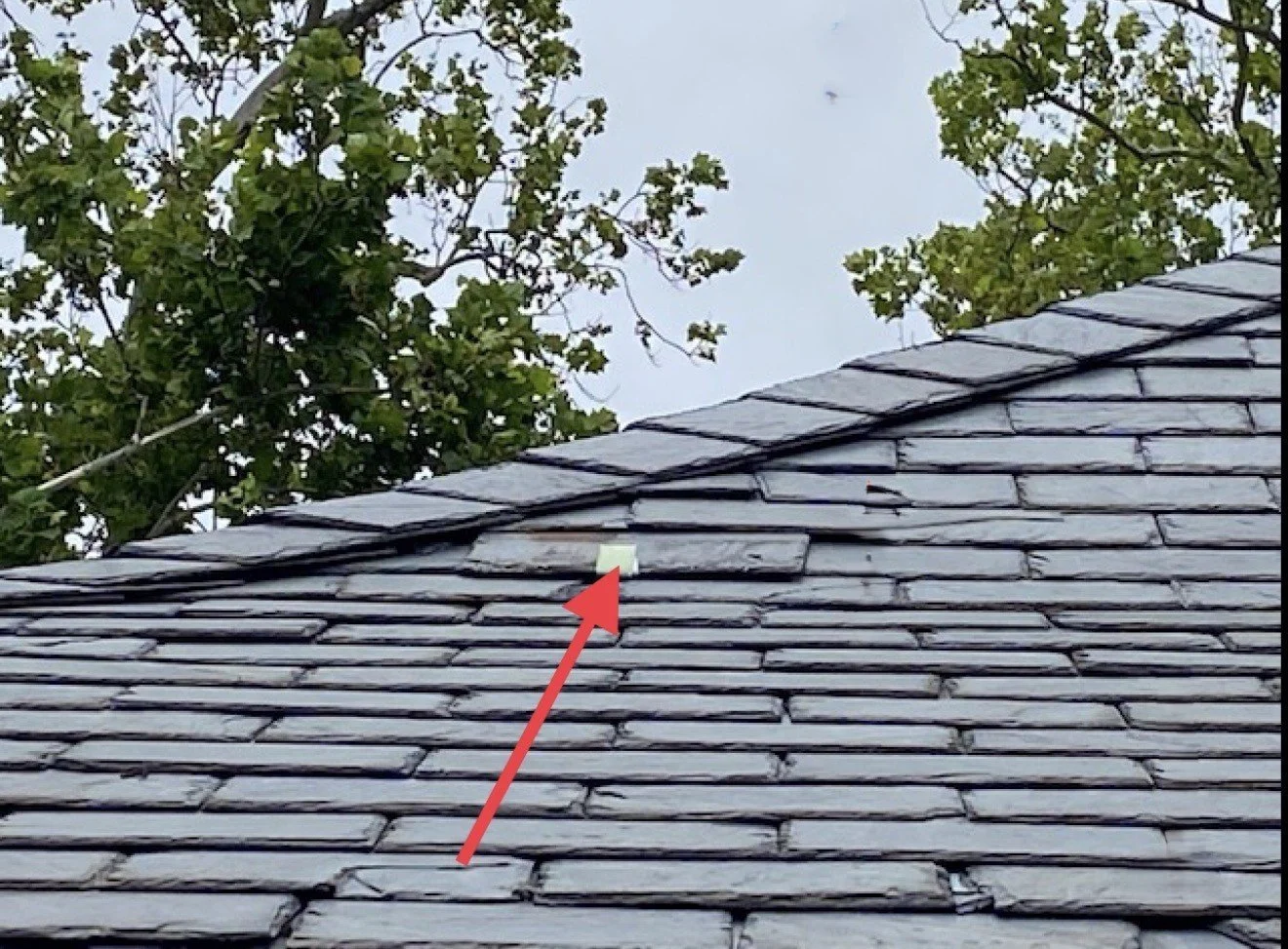
When a single slate is replaced within an existing roof, the correct method is a slate hook. Slate hooks are made specifically for this purpose. They hold the replacement slate securely in place and will outlast any other single-slate replacement method.
Instead, we often find handmade tabs, like the one shown above: a strip of metal bent into place to hold the slate. These tabs weren’t designed to carry the weight of a slate for decades. Over time they bend, loosen, or fail, and the slate begins to slide out of position.
Sliding Slate Throughout the Roof
Piece of metal
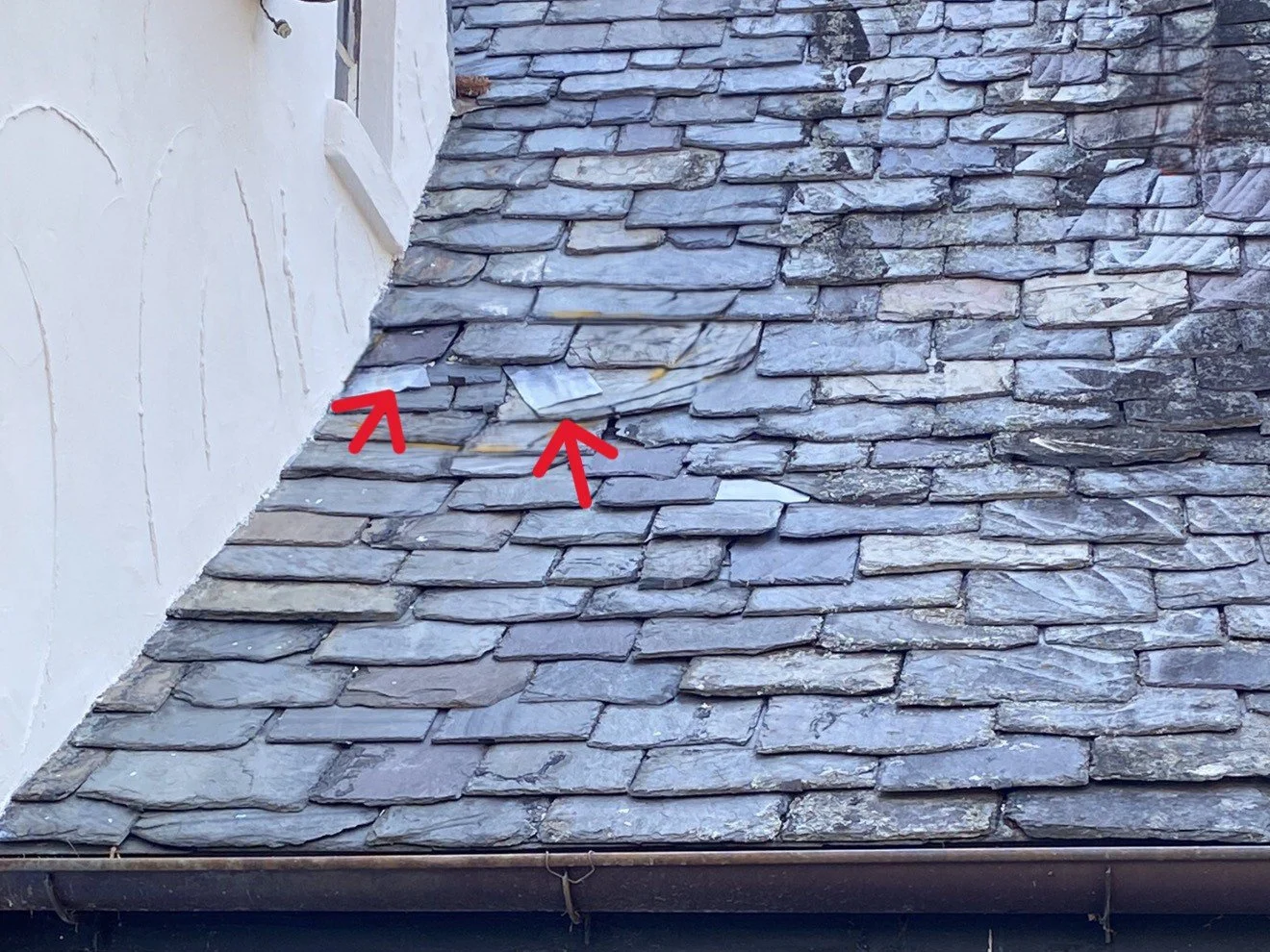
Once one improperly fastened slate slips, it leaves a gap in the roof and exposes the courses beneath it. On roofs that have had many repairs with tabs or other unknown methods, we often find sliding slates scattered across the entire surface.
In the photo above, the arrows point to flat pieces of metal that a previous roofer slid underneath slates that had begun to slip. Instead of resetting the slates with slate hooks, the metal was tucked in to fill the gap. It may look covered from the ground, but it doesn’t secure the slate, and it doesn’t seal the roof the way a properly installed slate does. Water can still work its way around and beneath it.
Each displaced slate is an opening for water. Correcting them means removing these makeshift patches and resetting or replacing every slate with proper slate hooks.
Flashing Not Properly Installed
Flashing is where most leaks begin: around chimneys, along walls, in valleys, and at roof penetrations. On a slate roof, flashing must be installed with the correct step flashing, counter flashing, and, where needed, a cricket to direct water away.
When flashing is installed incorrectly, or patched with sealant instead of replaced, water finds its way in slowly. By the time a leak shows inside, the wood beneath has often begun to rot. At that point the repair is no longer just new flashing. It’s rot repair to the decking and framing first, and then new flashing on top.
Hairline Cracks From Foot Traffic
Slate is strong, but it’s not made to be walked on. A roofer who walks directly on slate can leave hairline cracks behind, sometimes too small to see from the ground. Those cracks can grow with each freeze and thaw until the slate breaks or water gets through.
That’s why the setup matters so much. Before work begins, we set up roof ladders and roof jacks so that foot traffic stays off the slate as much as possible. It takes more time, but it protects the roof we’re there to repair.
Slate Lasts, But It Still Needs Care
Slate is one of the hardiest roofing materials there is, and it can outlast nearly any other roof. But long-lasting doesn’t mean maintenance-free. Flashing, valleys, and fasteners wear out long before the slate does, and they need attention over the years.
A slate roof that’s cared for properly can serve a home for generations. One that’s neglected, or repaired with shortcuts, will cost more to set right later.
Choose a Slate Specialist
Roofers who don’t work on slate every day often recommend replacing the whole roof, or they reach for caulk and tar because it’s what they know. A slate restoration specialist knows how to repair what you have, the right way.
If your slate roof has had repairs in the past and you’re not sure how they were done, we’d be glad to take a look. Ricardo has over 30 years of hands-on experience with slate, and he’ll give you an honest evaluation of what your roof needs and what it doesn’t.
Contact Carolina Slate to schedule a slate roof evaluation.