
Is It Real Slate? How to Tell Natural Slate from Asbestos and Look-Alike Shingles
Many homeowners tell us, “I have a slate roof.” Often they’re right. Sometimes the roof is something else that was made to look like slate.
From the ground, natural slate, asbestos-cement shingles and modern synthetic slate can look almost the same. On the roof, they’re very different materials. They need different repair methods, they carry different safety concerns, and they don’t all last the same length of time.
That’s why we confirm the material before we schedule any work.
Why It Matters
Natural slate is quarried stone. A well-installed natural slate roof can last 100 years or more, and in most cases it should be repaired and restored, not replaced.
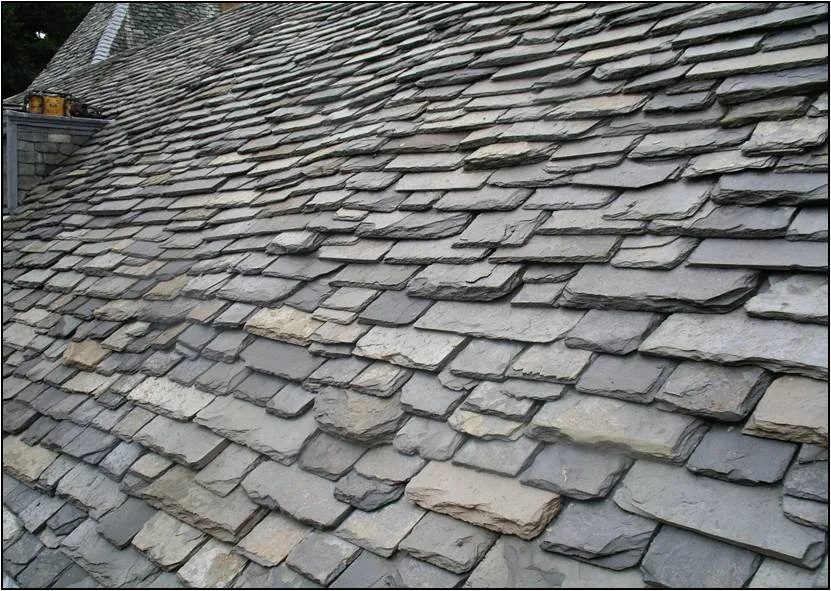
Natural Slate Roof
Asbestos-cement shingles were widely used from the 1920s through the 1970s. They were often sold as an affordable alternative to slate and shaped and colored to look like it. Many are still on homes across North Carolina and Georgia today. While they’re intact, they’re generally considered stable. Cutting, drilling, breaking or removing them can release asbestos fibers, so that work needs licensed asbestos professionals.
Carolina Slate is a slate restoration company. We are not licensed to work with asbestos-containing materials, so before we take on a job we need to confirm that the roof is natural slate.
Synthetic slate, made from rubber, polymer or modern fiber cement, is a newer product. It needs the manufacturer’s installation methods, not traditional slate techniques.
Signs You May Have Natural Slate
Varied thickness. Natural slate is split by hand, so no two pieces are exactly the same thickness. Up close, the roof has a slightly uneven, layered look.
Hand-trimmed edges. The edges are often beveled or slightly irregular, not machine-perfect.
Natural surface texture. Slate has a cleft, stone-like face and often a subtle sheen, especially when wet.
Color variation. Even within one color, natural slate shows small shifts in tone from piece to piece. Some colors weather over time; others stay true for decades.
Weight. Slate is heavy. Roofs built for slate usually have a substantial structure underneath.
Signs It May Be Asbestos-Cement or Another Look-Alike
Perfectly uniform size and thickness. Every shingle looks identical.
Very straight, machine-cut edges.
Embossed or stamped texture, sometimes a repeating pattern made to imitate stone.
Unusual shapes, such as diamond, hexagonal or “Dutch lap” patterns, which were common with asbestos-cement products.
A chalky or dull surface, with faded color that is the same across the whole roof.
Pre-punched nail holes in the same spot on every shingle.
Please don’t break, sand or drill a shingle to check. If there’s any chance the material contains asbestos, only an accredited lab should test it.
Why We Ask for Photos First
Looking up from the yard, it can be difficult to tell these materials apart. On past jobs, we’ve found that a material described as slate was actually asbestos-cement.
So before we schedule a visit, we often ask homeowners to text us clear, close-up photos of the roof. If you can safely photograph a fallen piece, a shingle edge at the gutter line, or a section through an attic window, that helps a great deal. It lets Ricardo confirm the material up front, saving you time and protecting everyone involved.