
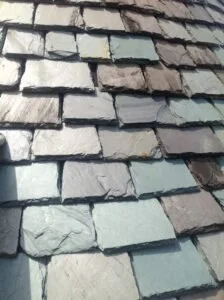
How We Match Replacement Slate on a Historic Roof
When a slate breaks or slips on a historic roof, the repair is only as good as the slate that goes back in. A replacement that is the wrong size, the wrong thickness, or the wrong stone can stand out from the street for decades. Worse, it can let water in. At Carolina Slate, matching the slate is one of the first things we work out, long before anyone climbs a ladder to make the repair.
Here is what goes into finding the right slate, and why it matters for your roof.
Why a close match matters
A slate roof is a system. Each slate overlaps the courses below it, and the roof stays dry because every piece sits flat and in line with its neighbors. One slate that is too short, too thick, or too thin breaks that pattern. Water can find its way past it, and the slates around it can crack under uneven pressure.
Natural slate also lasts 100 years or more. Whatever goes on your roof today will be up there for a very long time, so it is worth getting right.
Size: length and width
Slate is sized by length and width, such as 16" x 9" or 18" x 10". Length matters most, because it sets how far each slate overlaps the ones below it. A replacement that is shorter than the original leaves less overlap, and that is where leaks start.
Width affects how the joints line up from course to course. On a historic roof, we measure the existing slates in the area being repaired, because sizes can vary from one section of the roof to another.
Thickness
Most roofing slate falls somewhere between 3/16" and 3/8" thick, and many older roofs in North Carolina and Georgia were laid with thicker, heavier slate. A replacement has to match the thickness of the slates around it. A thin slate in a field of thick ones sits low and can rattle loose. A thick one sits high, lifts the slate above it, and can crack under foot traffic or the weight of snow and ice.
Color and how the slate ages
Some slates are called unfading. They keep close to their original color for their whole life. Others are weathering slates, which shift toward browns and buffs over time. Two slates that look alike on the pallet can look very different on the roof ten years later.
Our default replacement color is black, which blends well on most dark historic roofs. When a homeowner wants a closer match, we ask for at least two of the original slates from the roof. That lets us compare color, texture, and thickness side by side and take samples to suppliers instead of guessing from a photo.
How we source replacement slate
Our process for a slate repair works like this:
Measure and document. During our first visit, we record the size, thickness, color, and condition of the existing slate. We never make repairs on that first visit, because the right slate has to be found first.
Compare with original slates. If a close color match is wanted, we work from at least two of your original slates.
Source from the right quarry. We work with suppliers who quarry and split their own stone, and we ask direct questions about where the slate comes from and whether it is cut for roofing.
Order extra. We order more slate than the photos show, because a few more broken or slipped slates almost always turn up once we are on the roof.
Install with slate hooks. Replacement slates go in with slate hooks, not caulk, tar, or face nails, so the new slate sits flat and holds.
What homeowners can do
If you have spare slates in a garage, basement, or shed, hold on to them. Leftover slate from the original installation is often the best match there is. If a slate falls from your roof, keep it, even if it is broken. It tells us a great deal about what is up there.
And if someone suggests replacing a whole slate roof because they cannot find matching slate, get a second opinion from a slate specialist. In most cases, the roof can be repaired with slate that fits.
Talk with Carolina Slate
Ricardo has more than 30 years of hands-on experience restoring slate, clay tile, and copper roofs on historic homes and buildings across North Carolina and Georgia. If your slate roof needs repairs, or you want to know what it would take to match your existing slate, contact Carolina Slate to schedule a visit. You can also text photos of your roof to (919) 448-5222.