
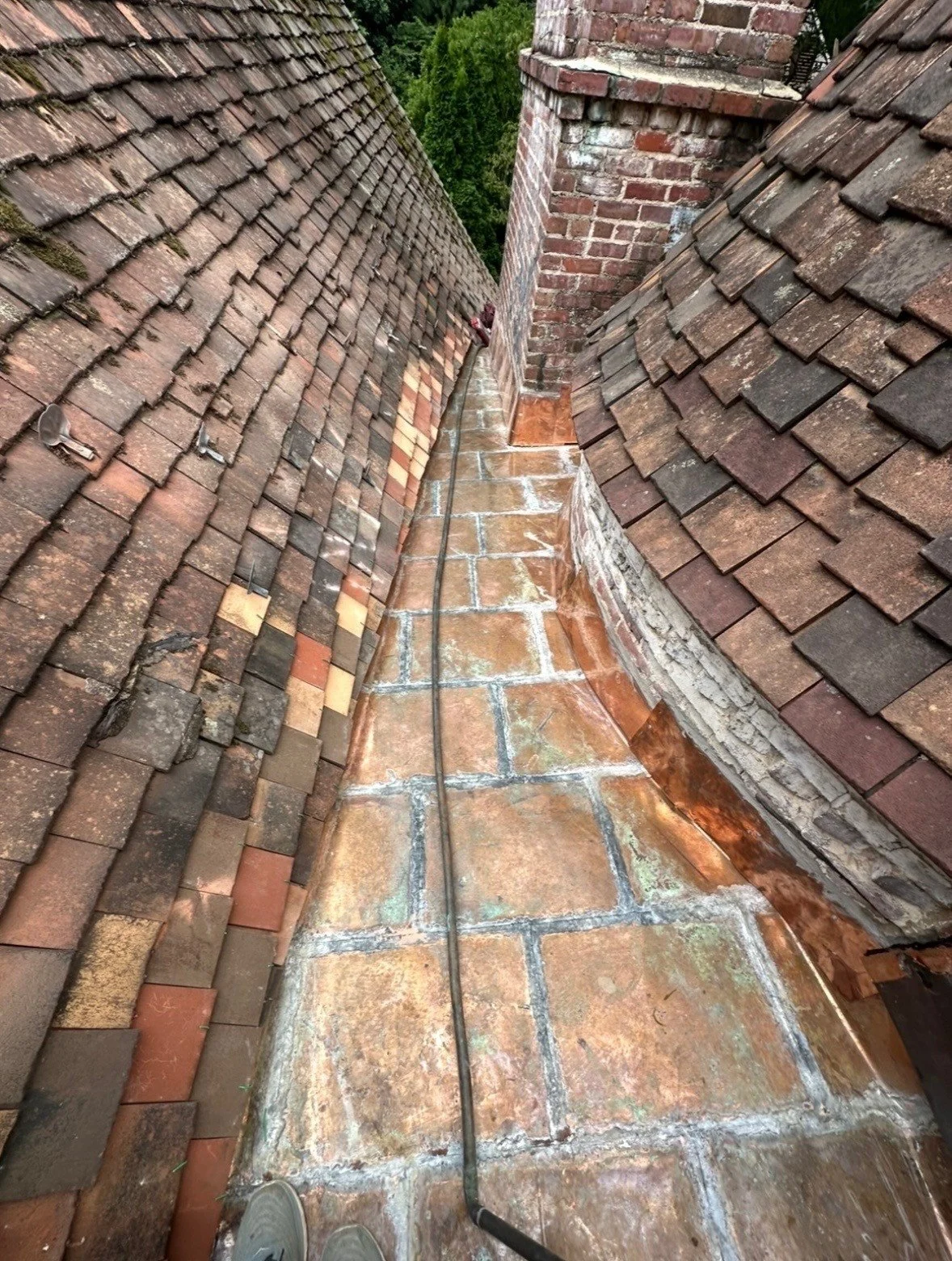
Copper Flat Seam
The integration of historic clay tile with functional metalwork is one of the most demanding aspects of architectural roofing. When dealing with aged, weathered tile and a failing copper or transition, the only permanent solution is a complete "re-do" of the underlying metal using time-tested methods.
This project involved a complex transition where multiple roof planes and a brick chimney met. The existing flat seam copper had reached the end of its service life, necessitating a full replacement to ensure the structural integrity of the home.
The Challenge: Marrying Old Tile with New Copper
The primary difficulty in a repair like this is the delicate nature of the existing tile. Historic tiles become brittle over time; they possess a unique patina and texture that cannot be replicated with modern replacements. To perform a proper flat seam copper installation, the surrounding tile must be carefully integrated to ensure the new flashing sits high enough to prevent water backflow while maintaining the original aesthetic.
The Process: Flat Seam Construction
Flat seam copper is the gold standard for low-slope areas or internal gutters where water may dwell. Unlike standing seam, which uses vertical ribs, flat seam construction involves:
Individual Copper Pans: Small, rectangular sheets of copper are pre-bent with interlocking edges.
Cleating: Each pan is secured to the roof deck using copper cleats, allowing the metal to "breathe" (expand and contract) with temperature changes without stressing the fasteners.
Soldered Joints: Every seam is meticulously cleaned, fluxed, and soldered by hand. This creates a monolithic, watertight skin that can handle the heavy water volume typically found in valleys and chimney transitions.
Why Solder Matters
In the photo, you can see the distinctive silver lines of the soldered seams. While modern sealants and caulk are common in "quick-fix" roofing, they are temporary. Solder creates a chemical bond between the copper sheets, ensuring that the joints remain as durable as the metal itself. For a roof with a 75- to 100-year lifespan, anything less than a fully soldered seam is a compromise.
The Result
The finished installation provides a seamless, durable transition that honors the home’s history. The new copper will eventually weather from its bright "new penny" finish to a deep bronze and, eventually, a classic green patina, blending perfectly with the old-world character of the clay tiles.
When dealing with high-end materials like Ludowici tile or natural slate, the metalwork is not just an accessory—it is the foundation of the roof’s performance. A proper flat seam re-do ensures that these historic structures remain protected for the next generation.